In this article
- The short answer
- Typical trick-or-treat times by age
- How to find your town's trick-or-treat hours
- Does trick-or-treating start at sunset?
- The porch-light rule
- When does trick-or-treating end?
- If you are handing out candy
- Trick-or-treating safety by time of day
- What if the weather is bad?
- Planning your Halloween evening
- Conclusion
- Frequently asked questions
Every Halloween the same question comes up: what time does trick-or-treating actually start? Go out too early and nobody is ready; too late and the porch lights are off and the candy bowls are empty. There is no single official time, but there are clear patterns — and a few easy ways to find the right answer for your own street.
This guide covers typical trick-or-treat times for 2026, how they change with children's ages, how to check your town's hours, and the etiquette that tells you when to knock and when to stop. To see how long is left, use the live Halloween Countdown.
The short answer
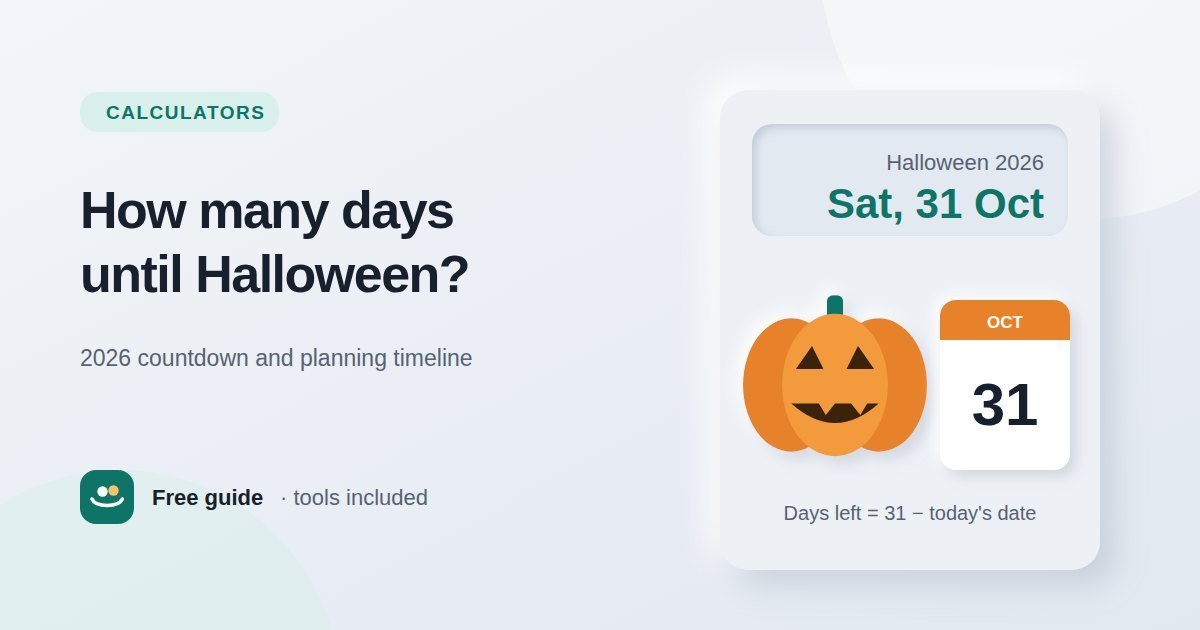
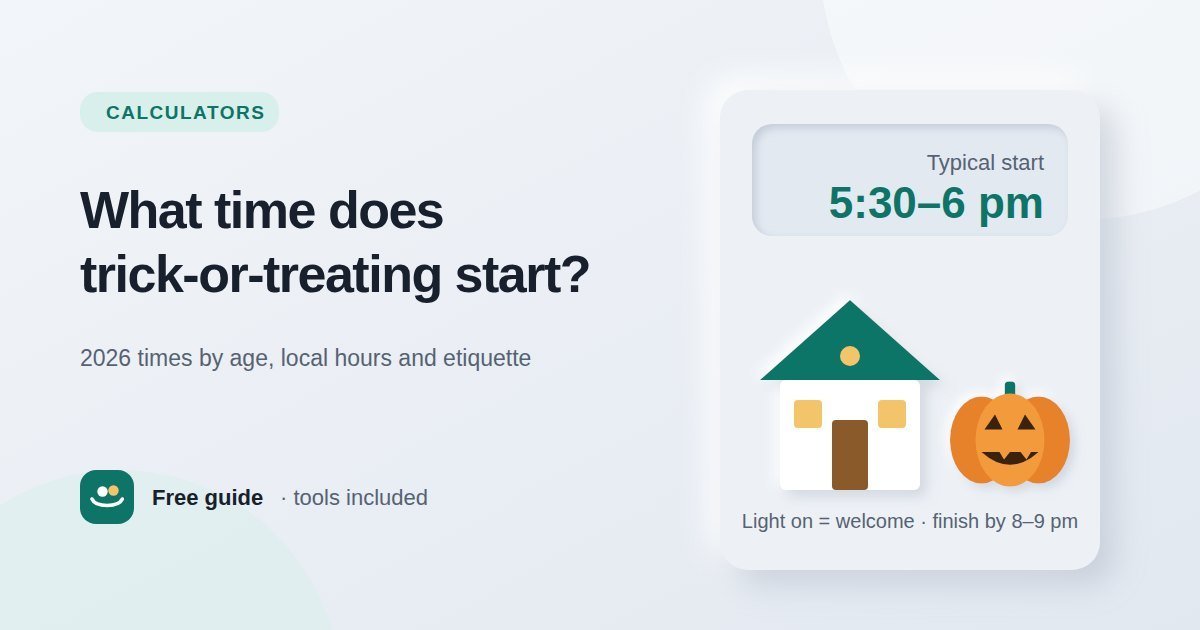
In most neighbourhoods, trick-or-treating starts around 5:30 to 6:00 pm and winds down by 8:00 to 9:00 pm. The busiest stretch is usually between about 6:00 and 8:00 pm. Halloween 2026 falls on Saturday, 31 October, so with no school or work the next morning, expect things to begin a little earlier and run a little later than on a weeknight.
These are typical times, not rules. Some towns and cities set official trick-or-treat hours, and a few hold it on a different day altogether. Always check locally — see below for how.
Typical trick-or-treat times by age
| Age group | Typical time | Why |
|---|---|---|
| Toddlers and pre-schoolers | 4:00–6:00 pm | Daylight, quieter streets, home before bedtime |
| Ages 5–8 | 5:30–7:30 pm | Dusk adds atmosphere without being too late |
| Ages 9–12 | 6:00–8:30 pm | The busiest, most sociable part of the evening |
| Teenagers | 7:00–9:00 pm | After the youngest children have finished |
These ranges are a guide. Local custom, the weather and how well lit your streets are all matter more than the clock.
How to find your town's trick-or-treat hours
- Check your town, city or county website and its official social media pages. Where hours are set, they are usually announced in October.
- Look at the local police or fire department page. They often publish hours and safety advice together.
- Ask in neighbourhood groups or your homeowners' or residents' association.
- Ask the school. Schools and parent groups usually know about local events and any change of date.
- Ask a neighbour who has lived on the street for a few years — they will know when children really arrive.
Many places set no hours at all and simply follow custom. In that case, use the typical times above and the porch-light rule below.
Does trick-or-treating start at sunset?
Roughly, yes. Trick-or-treating traditionally begins around dusk, and in much of the US, Canada and the UK the sun sets somewhere between late afternoon and early evening at the end of October — earlier the further north you live. Families with small children often start an hour or so before sunset and finish as it gets dark.
The clocks matter too. In the UK and Europe, clocks go back on Sunday, 25 October 2026 — the weekend before Halloween — so it will already be dark early. In most of the US and Canada, clocks do not go back until the early hours of Sunday, 1 November, the night after Halloween, so the evening stays lighter for longer.
The porch-light rule
Across most of the US and Canada, the signal is simple:
- Light on (or decorations lit) — trick-or-treaters are welcome.
- Light off — the household is not taking part, has run out of candy, or has finished for the night. Skip the house.
In the UK and Ireland, a pumpkin or decorations outside the door usually means the same thing: knock only where a house is clearly joining in.
When does trick-or-treating end?
Most households stop answering the door between 8:00 and 9:00 pm. As a rule, do not knock after 9:00 pm, and stop earlier if lights are going off along the street. Where a town sets official hours, the finishing time is the one to follow most carefully.
If you are handing out candy
- Be ready by 5:30 pm on a Saturday Halloween — the youngest visitors come first.
- Expect the rush between 6:00 and 8:00 pm.
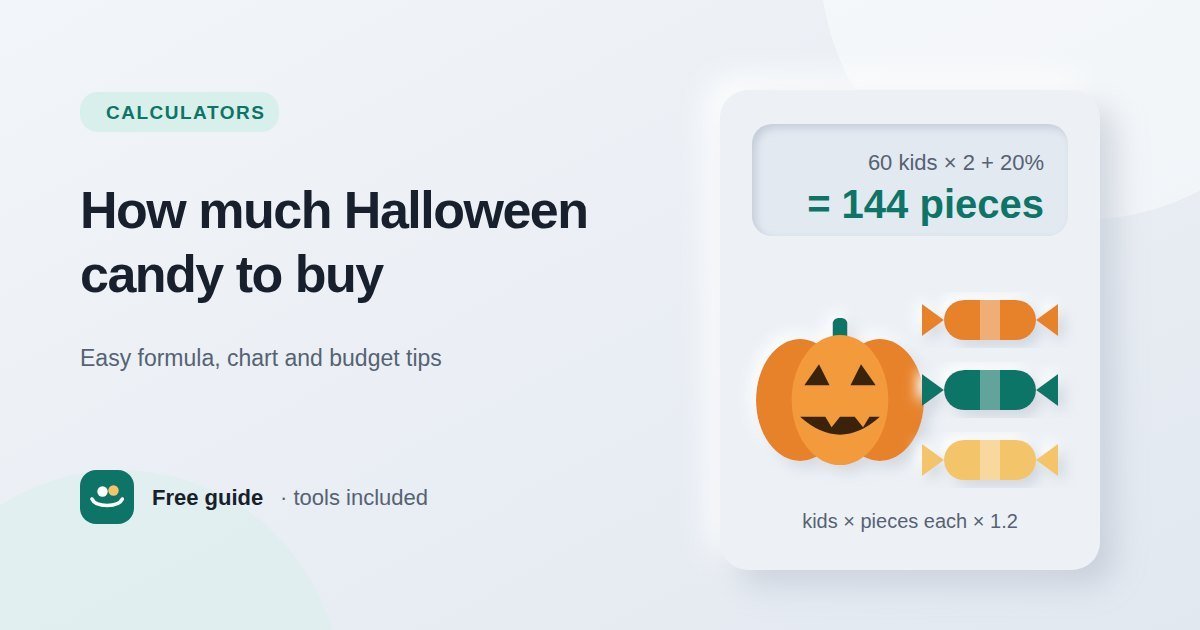
- Buy enough. Our guide to how much Halloween candy to buy gives a simple formula: trick-or-treaters × pieces each × 1.2.
- Keep a few non-food treats for children with allergies.
- Turn the light off when you are done, so nobody keeps knocking.
Trick-or-treating safety by time of day
- Before dark: the safest time for very young children; drivers can see them easily.
- At dusk: the hardest time for drivers to see. Add reflective tape or glow sticks to dark costumes and carry a torch.
- After dark: stay on pavements, cross at corners, and keep to well-lit streets you know.
- For older children going without an adult: agree a route, a group and a time to be home.
- For drivers: slow right down in residential streets between 5:00 and 9:00 pm.
What if the weather is bad?
Heavy rain or cold cuts the evening short — families go out earlier and head home sooner. Some towns postpone or move trick-or-treating when severe weather is forecast, which is another reason to check local announcements on the day. Indoor alternatives such as shopping-centre events, "trunk-or-treat" gatherings in car parks and community hall parties usually run in the afternoon or early evening.
Planning your Halloween evening
| Time | What to do |
|---|---|
| 4:00 pm | Eat a proper meal; get costumes and face paint on |
| 5:00 pm | Photos while it is still light; put candy by the door |
| 5:30–6:00 pm | Head out with younger children |
| 6:00–8:00 pm | Peak trick-or-treating |
| 8:00–9:00 pm | Last houses; head home and check the sweets |
For everything that needs doing in the weeks before, see our Halloween countdown and planning timeline.
Conclusion
Trick-or-treating usually starts between 5:30 and 6:00 pm and ends by 8:00 to 9:00 pm, with the youngest children out first and teenagers last. Because Halloween 2026 is on a Saturday, expect a slightly earlier start and a longer evening. Check whether your town sets official hours, follow the porch-light rule, and stop knocking by 9:00 pm. Want to know exactly how long is left? The Halloween Countdown shows the days, hours and minutes.
Frequently asked questions
What time does trick-or-treating start in 2026?
In most places it starts around 5:30 to 6:00 pm on Saturday, 31 October 2026. Some towns set official hours, so check locally.
What time does trick-or-treating end?
Usually between 8:00 and 9:00 pm. Avoid knocking after 9:00 pm or at houses with their lights off.
Is 4 pm too early to trick-or-treat?
For toddlers and pre-schoolers, 4:00 to 5:00 pm is common and usually fine, but fewer houses will be ready. Most households expect visitors from about 5:30 pm.
Is trick-or-treating always on 31 October?
Almost always, but a few towns hold it on a different day, such as the nearest weekend. Local council or police announcements will say.
What does a porch light mean on Halloween?
A light that is on means trick-or-treaters are welcome. A light that is off means the household is not taking part or has finished for the night.
What age should children stop trick-or-treating?
There is no fixed age. Many children stop around 12 to 14, though a few places set their own age limits. Older children who dress up and are polite are usually welcome.